AR Automations is a leading name in smart technology solutions, we provide innovative systems that simplify tracking, identification, and automation. In today’s fast-moving digital world, businesses are constantly looking for smarter ways to manage assets and data. This is where rfid tags and a reliable RFID tag system play a powerful role in transforming operations.
From retail stores to warehouses and healthcare facilities, RFID technology is changing the way industries operate. It not only improves efficiency but also reduces manual errors, making processes faster and more accurate.
What is RFID Tag ?
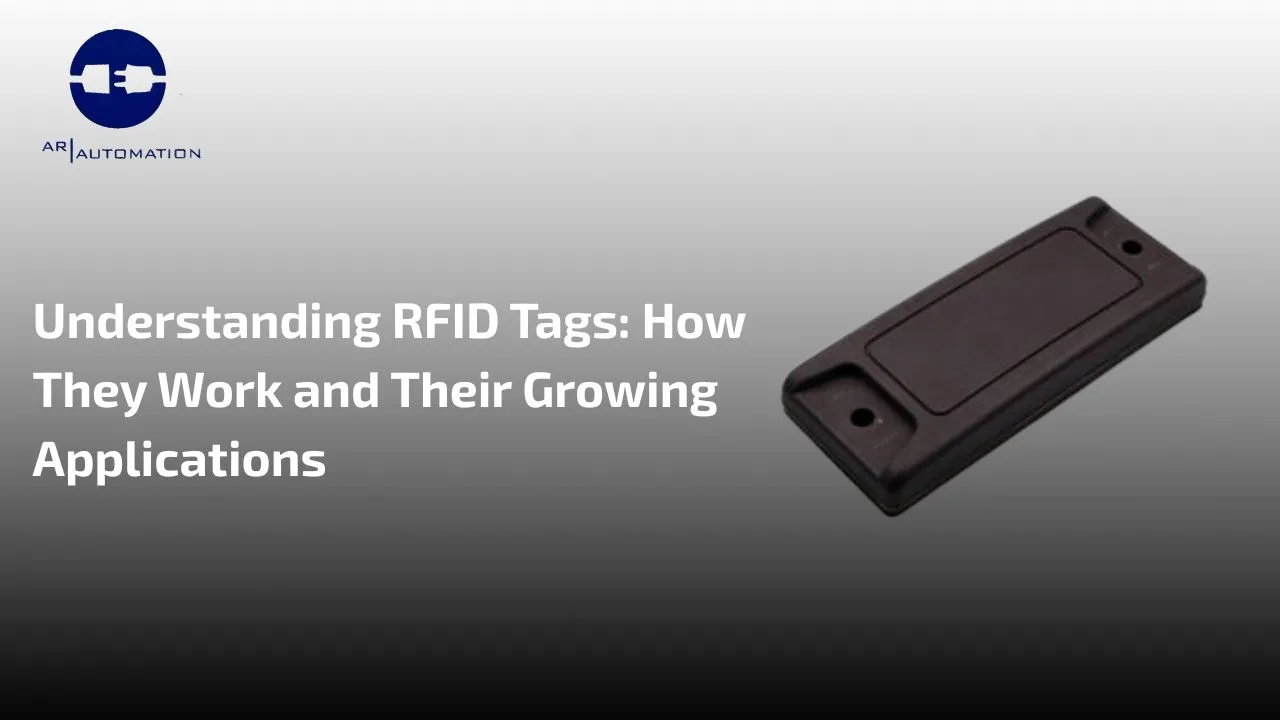
An RFID tag is a small electronic device that uses radio frequency signals to store and transmit data. These rfid tags are typically attached to objects, products, or assets to track and identify them automatically. Unlike barcodes, RFID technology does not require direct line-of-sight scanning, which makes it more efficient and convenient.
A complete rfid tag system consists of three main components:
- RFID tags (attached to items)
- RFID reader (used to scan and collect data)
- Software system (used to process and store information)
AR Automations offer advanced RFID solutions that are designed to meet the needs of modern industries, ensuring seamless tracking and data management.
Also Read : Programmable Logic Controller: What Is a PLC and How Does It
How Does an RFID Tag Work?
Understanding how an rfid tag works is essential to see its real value. The process is simple yet highly effective. When an RFID reader sends out radio signals, the RFID tags respond by transmitting their stored information back to the reader. This data is then captured and processed by the system.
There are two main types of rfid tags:
- Passive RFID Tags: These tags do not have their own power source. They are activated by the signal from the RFID reader and are commonly used in retail and inventory management.
- Active RFID Tags: These come with a built-in battery, allowing them to transmit signals over longer distances. They are often used in tracking high-value assets or vehicles.
A well-designed rfid tag system ensures that this communication happens quickly and accurately. AR Automations offer systems that are reliable, scalable, and easy to integrate into existing operations.
Benefits of RFID Technology
The growing use of rfid tags is driven by the numerous advantages they offer to businesses across different sectors.
- Improved Accuracy: Manual data entry can lead to errors, but an automated rfid tag system ensures precise tracking and identification.
- Faster Operations: RFID technology speeds up processes like inventory management, asset tracking, and supply chain operations.
- Enhanced Security: With unique identification codes, rfid tags help prevent theft and unauthorized access.
- Real-Time Tracking: Businesses can monitor the movement of goods and assets in real time, improving decision-making.
AR Automations continues to offer advanced RFID solutions that help organizations achieve higher efficiency and better control over their operations.
Why Businesses are Adopting RFID Systems
The demand for rfid tag system solutions is increasing because businesses are focusing on automation and efficiency. RFID technology reduces dependency on manual labor, minimizes errors, and improves overall productivity.
Companies that adopt rfid tags gain a competitive advantage by improving their operational efficiency and customer satisfaction. AR Automations provide cutting-edge RFID solutions that keep businesses ahead in a competitive market. Our focus on innovation ensures that clients always have access to the latest advancements in RFID technology.
RFID technology is revolutionizing the way businesses track, manage, and secure their assets. With the ability to automate processes and provide real-time data, rfid tags and a robust rfid tag system have become essential tools for modern industries. AR Automations stands as a reliable partner, committed to offer high-quality RFID solutions that drive efficiency and growth. By adopting RFID technology, businesses can not only improve their operations but also prepare for a smarter and more connected future.