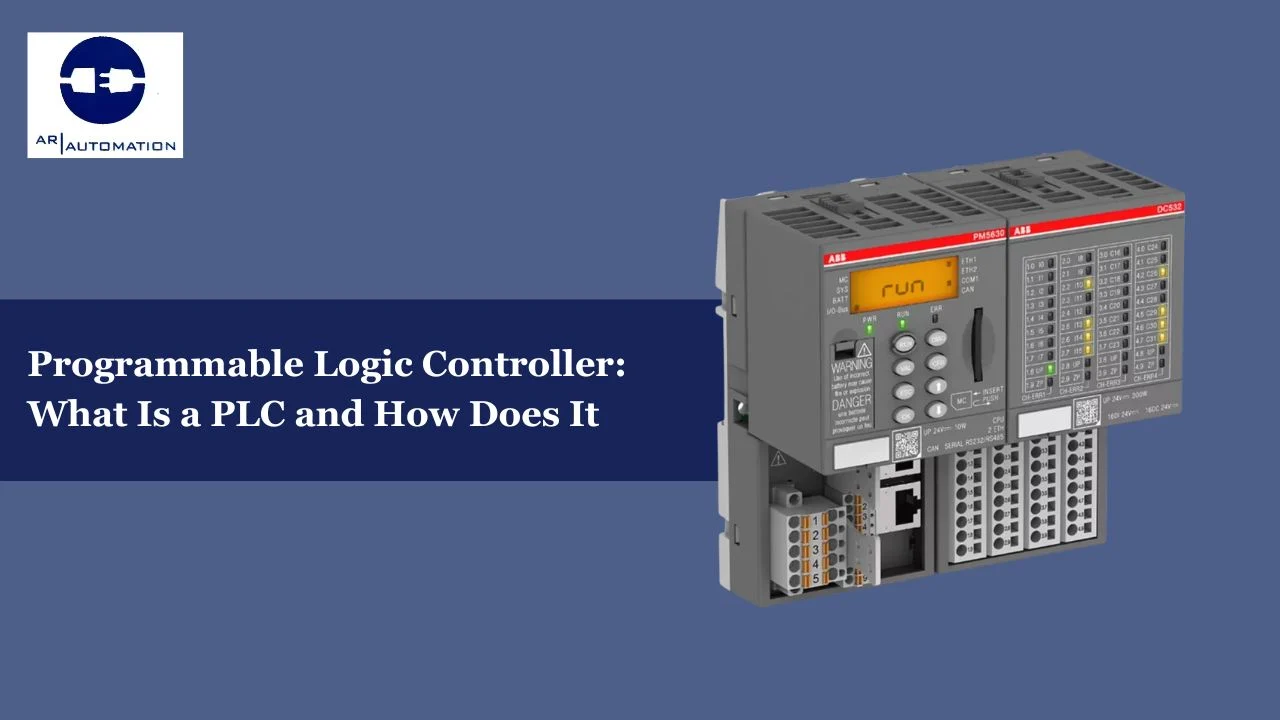
A Programmable Logic Controller (PLC) is one of the most widely used technologies for controlling industrial machines and processes. From manufacturing plants and packaging lines to material handling systems, PLCs help equipment operate accurately and efficiently. AR Automation provides industrial automation solutions that help businesses improve their control systems and streamline daily operations.
Understanding PLC technology is useful for industries looking to upgrade their machinery, improve safety, and achieve better operational performance. With the right control system, businesses can manage complex processes more easily and reduce unnecessary downtime.
What Is a Programmable Logic Controller (PLC)?
A Programmable Logic Controller is an industrial digital computer designed to monitor inputs, process programmed instructions, and control outputs. Unlike ordinary computers, PLCs are built to operate in demanding industrial environments where temperature changes, vibration, electrical noise, and continuous operation are common.
The PLC meaning refers to a controller that can be programmed to perform specific automation tasks according to predefined logic. It receives information from sensors, switches, and other input devices, processes that information, and sends commands to motors, valves, alarms, and other output devices.
How Does a PLC Work?
A PLC works by repeatedly following a simple operating cycle. It collects information from connected devices, executes its control program, and updates the outputs according to the programmed conditions.
1. Input Collection
The first step involves receiving signals from input devices such as proximity sensors, push buttons, temperature sensors, limit switches, and level sensors. These devices inform the PLC about the current condition of a machine or process.
2. Program Processing
After collecting the input signals, the PLC processes them according to its stored instructions. The program determines which actions should take place based on the input conditions and control logic.
3. Output Control
Once the program has been processed, the PLC updates its outputs. These outputs can activate motors, operate pneumatic valves, switch on indicator lights, or control other equipment.
4. Continuous Monitoring
The PLC repeats this cycle continuously while the system is running. It monitors changing conditions and adjusts machine operations according to the program. This allows industrial equipment to respond quickly and maintain consistent performance.
What Are the Main Components of a PLC?
A PLC contains several important components that work together to perform automation tasks.
- Central Processing Unit (CPU): The CPU executes the control program, processes input information, and manages the overall operation of the controller.
- Power Supply: The power supply provides the electrical power required by the PLC and its internal components.
- Input and Output Modules: Input modules receive signals from field devices, while output modules send control signals to connected machinery and equipment.
- Memory: Memory stores the control program, configuration settings, and other information required for the PLC to operate.
- Communication Ports: These ports allow the PLC to communicate with human-machine interfaces (HMIs), computers, drives, remote input/output systems, and other industrial devices.
Together, these components create a dependable control system suitable for different automation applications.
PLC Basics and Programming
PLC programs can be created using different programming languages, depending on the controller and project requirements. Other commonly used languages include Function Block Diagram, Structured Text, and Sequential Function Chart.
During plc programming, engineers define operating conditions, create control sequences, configure inputs and outputs, and test the program before putting it into service. Industrial PLC programming may involve advanced functions such as motor speed control, process monitoring, safety interlocks, communication with other controllers, and alarm management. The complexity of the program depends on the machinery, production requirements, and level of automation.
Applications of PLCs in Industrial Automation
PLCs are used across a wide range of industries because they provide flexible and reliable machine control.
- Manufacturing: PLCs coordinate production machinery, assembly operations, and automated workstations.
- Packaging: They control filling, sealing, labeling, counting, and packaging sequences.
- Material Handling: PLCs manage conveyor systems, sorting equipment, lifting mechanisms, and product movement.
- Water and Wastewater Treatment: Controllers monitor pumps, tank levels, valves, and treatment processes.
- Food and Beverage Processing: PLCs help regulate temperatures, control processing sequences, and manage filling and mixing operations.
- Automotive Industry: They support robotic cells, assembly lines, inspection systems, and automated material movement.
These applications demonstrate how programmable logic control helps businesses achieve greater consistency and improve process management.
Benefits of Using a PLC System
A PLC offers several advantages for industrial automation. It reduces the need for complex hardwired control circuits and allows operating logic to be modified through software. This flexibility can simplify system upgrades and accommodate changing production requirements.
PLCs also support accurate, repeatable machine operations and help reduce errors associated with manual control. Their diagnostic features make it easier to identify certain faults, while communication capabilities allow operators to monitor processes through connected systems.
A Programmable Logic Controller is an essential part of modern industrial automation. By receiving input signals, processing programmed instructions, and controlling outputs, a PLC helps machinery operate safely, accurately, and consistently. Understanding PLC basics and the principles of industrial plc programming allows businesses to make better decisions when developing or upgrading automated systems. With appropriate equipment, effective programming, and regular maintenance, PLC-based systems can improve productivity, simplify troubleshooting, and support long-term industrial performance. AR Automation can help businesses identify suitable automation approaches based on their operational requirements.