Monitoring and maintaining each device manually can be time-consuming and expensive. This is where remote device management becomes an essential solution. With advanced remote device management services, businesses can monitor, configure, troubleshoot, and update their connected devices from a centralized platform. AR Automation can offer reliable automation and industrial networking solutions that help organizations improve operational efficiency while reducing maintenance costs.
What Is Remote Device Management?
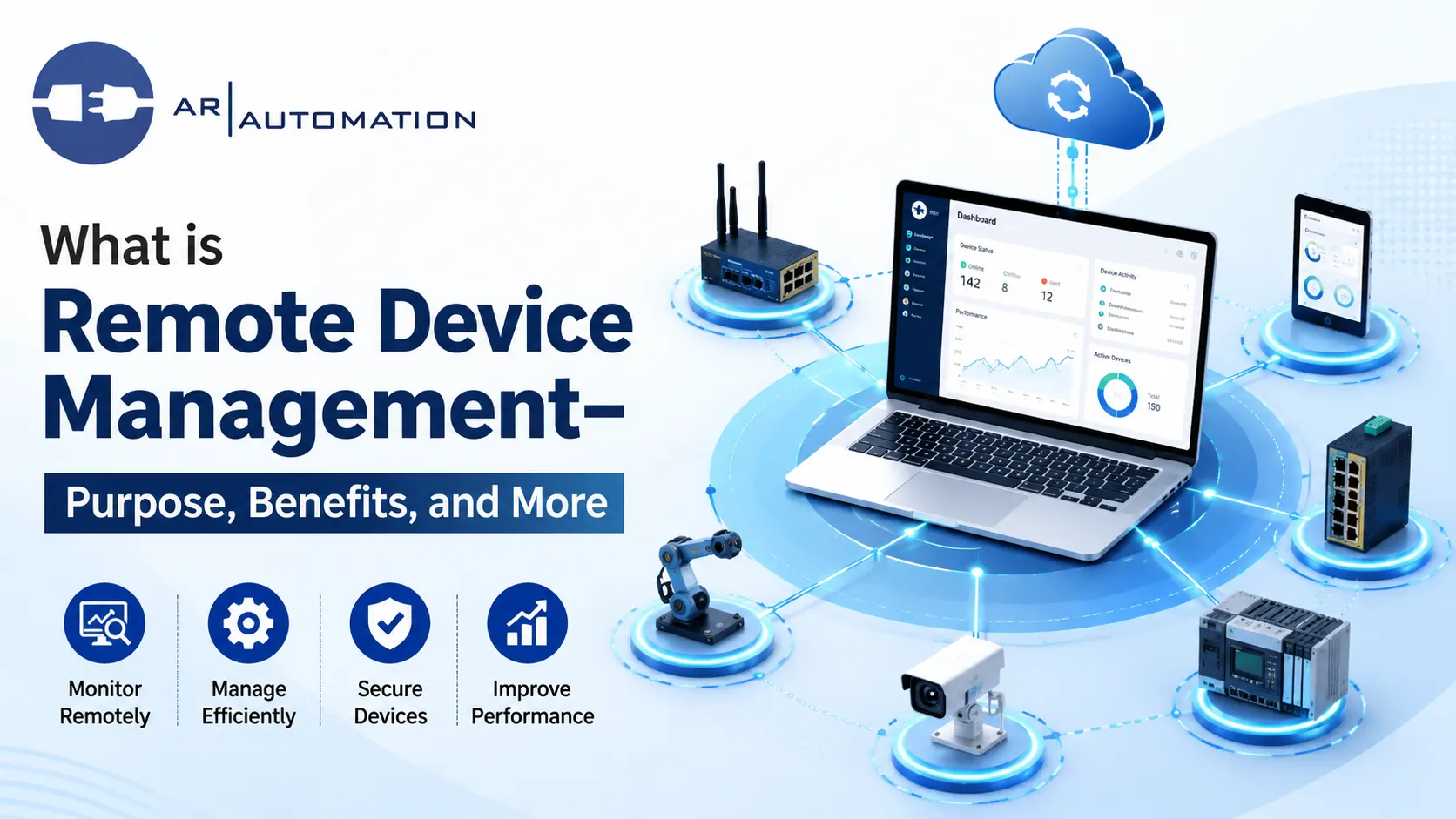
Remote device management is the process of monitoring and controlling connected devices from a centralized location through a network or internet connection. Depending on the system, administrators can view device status, update software, change settings, monitor performance, identify faults, and perform other maintenance activities without being physically near the equipment.
The remote management system allows businesses to monitor equipment performance, detect faults, install firmware updates, change configurations, and resolve technical issues without physical access. This technology is widely used in manufacturing industries, smart factories, IT infrastructure, healthcare, transportation, energy, and commercial facilities.
Purpose of Remote Device Management
The primary objective of remote device management is to simplify the administration of connected equipment while improving productivity and reducing operational downtime.
Some important purposes include:
- Continuous monitoring of connected devices
- Faster fault detection
- Remote software and firmware updates
- Improved device security
- Reduced maintenance visits
- Better operational efficiency
- Centralized device control
- Enhanced system reliability
Businesses using remote device management services can respond quickly to technical issues and maintain uninterrupted operations.
How Does Remote Management of Devices Work?
The remote management of devices generally begins by connecting compatible equipment to a secure network or management platform. Each device communicates with the central system and provides relevant information such as connection status, performance data, alerts, or diagnostic information.
A typical system may include:
- Connected industrial or IT devices
- Network connectivity
- A centralized management platform
- Authentication and access controls
- Monitoring and alerting functions
- Remote maintenance tools
- Data and performance reporting
Security is particularly important because remote access creates a connection to equipment that may be critical to business operations. Proper authentication, authorization, encryption, network segmentation, and access policies should therefore be considered when implementing a remote management system.
Benefits of Remote Device Management
Reduced Maintenance Costs
One of the biggest advantages is the potential reduction in on-site service visits. Technicians can investigate many routine problems remotely, reducing travel time and associated expenses.
Faster Troubleshooting
Remote access allows support teams to investigate issues as soon as an alert is received. Faster diagnosis can help organizations restore normal operation more quickly.
Reduced Downtime
Unexpected equipment problems can affect production and business operations. Continuous monitoring and faster intervention can help identify problems earlier and reduce unnecessary downtime.
Centralized Device Monitoring
Instead of checking individual devices separately, administrators can monitor multiple connected devices through one management environment. This provides a clearer view of the overall system.
Easier Software and Firmware Updates
Managing updates across a large number of devices can be time-consuming. Depending on the equipment and platform, updates can be coordinated remotely, helping organizations maintain consistent software versions.
Better Asset Visibility
Remote management gives businesses a clearer understanding of which devices are connected, which are operational, and which may require attention. This can make asset management more organized.
Features of Remote Device Management Services
Reliable remote device management services provide numerous features that simplify device administration.
Some common features include:
- Real-time device monitoring
- Centralized management dashboard
- Remote diagnostics
- Firmware updates
- Configuration management
- Performance reporting
- Event notifications
- User access control
- Secure communication
- Data logging
These capabilities help organizations maintain reliable and efficient operations.
Why Choose AR Automation?
Selecting an experienced automation partner ensures successful implementation and long-term system performance. AR Automation has extensive expertise in industrial networking and automation technologies, delivering dependable solutions for modern businesses. Our experienced professionals understand the unique challenges of industrial operations and provide practical solutions tailored to customer requirements. With advanced remote device management services, businesses can monitor equipment, perform updates, diagnose faults, and manage connected assets from virtually anywhere.
The remote management of devices reduces downtime, lowers maintenance costs, and enhances productivity through centralized control and real-time monitoring. Whether managing industrial machinery, automation systems, or smart infrastructure, a dependable remote device management service helps organizations stay connected and competitive. AR Automation can offer innovative automation and networking solutions that support efficient device management, helping businesses achieve higher productivity, improved system performance, and long-term operational success.