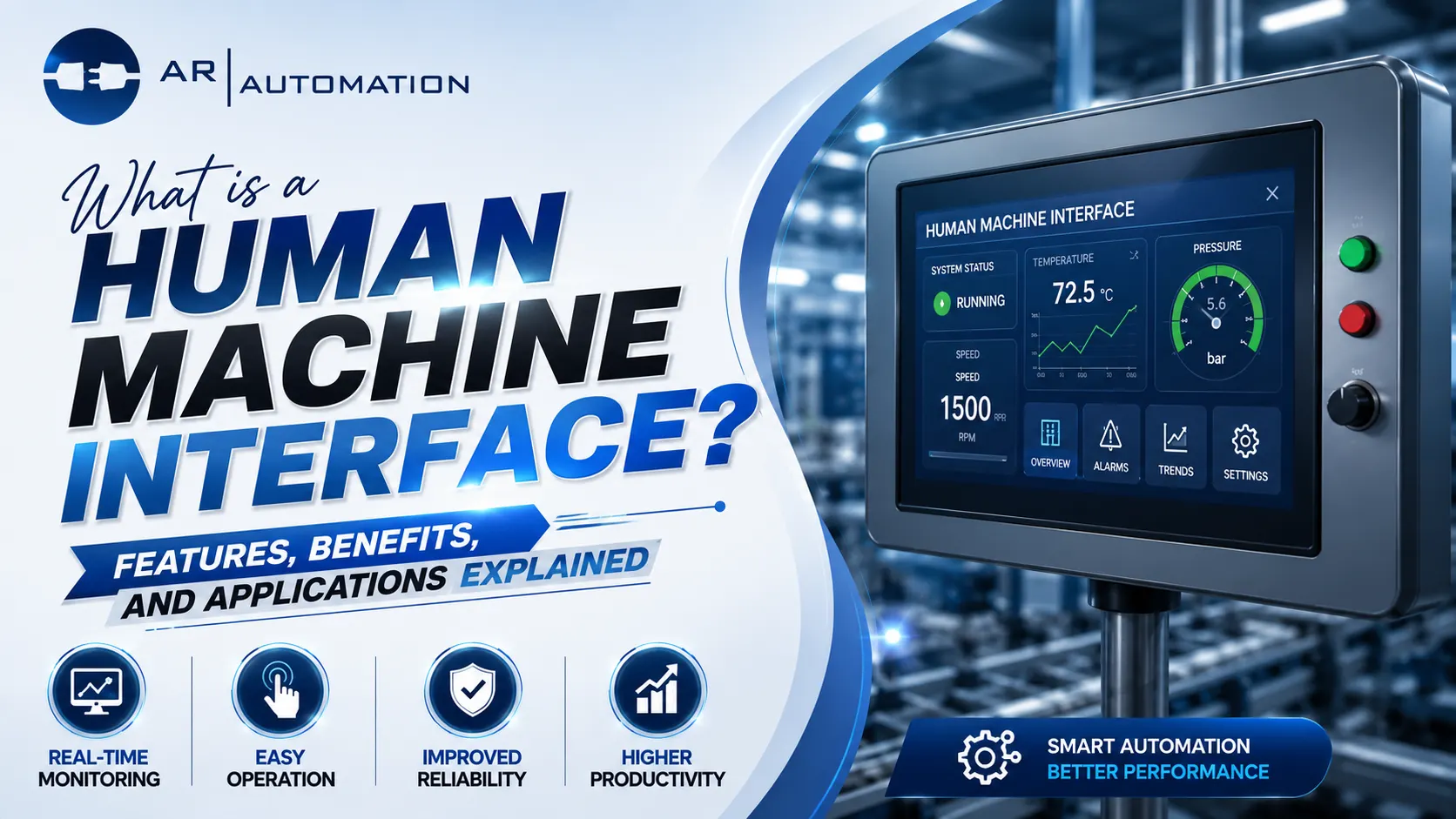
Modern industries rely heavily on automation to improve productivity, reduce errors, and ensure smooth operations. However, machines and automated systems require an easy way for operators to monitor, control, and communicate with them. This is where a Human Machine Interface (HMI) plays a vital role. An HMI serves as the communication bridge between people and machines, allowing operators to manage industrial processes through a user-friendly graphical interface.
If you have ever wondered about the hmi full form, it stands for Human Machine Interface. It is one of the most important components in industrial automation because it enables operators to interact with PLCs, sensors, drives, and other control devices without needing complex programming knowledge. AR Automation is a trusted name in industrial automation solutions and continues to offer advanced HMI systems that improve operational efficiency, machine monitoring, and process control across various industries.
HMI Full Form and Its Importance
The hmi full form is Human Machine Interface. It refers to the display screen or touch panel that allows operators to communicate with industrial machines and automation systems. Through an HMI, users can start or stop machines, monitor production data, adjust settings, receive alarms, and troubleshoot issues in real time.
In industrial environments, the hmi display full form is also Human Machine Interface Display, highlighting the role of the display screen used to visualize machine performance, production statistics, and system status.
HMI Full Form in Electrical
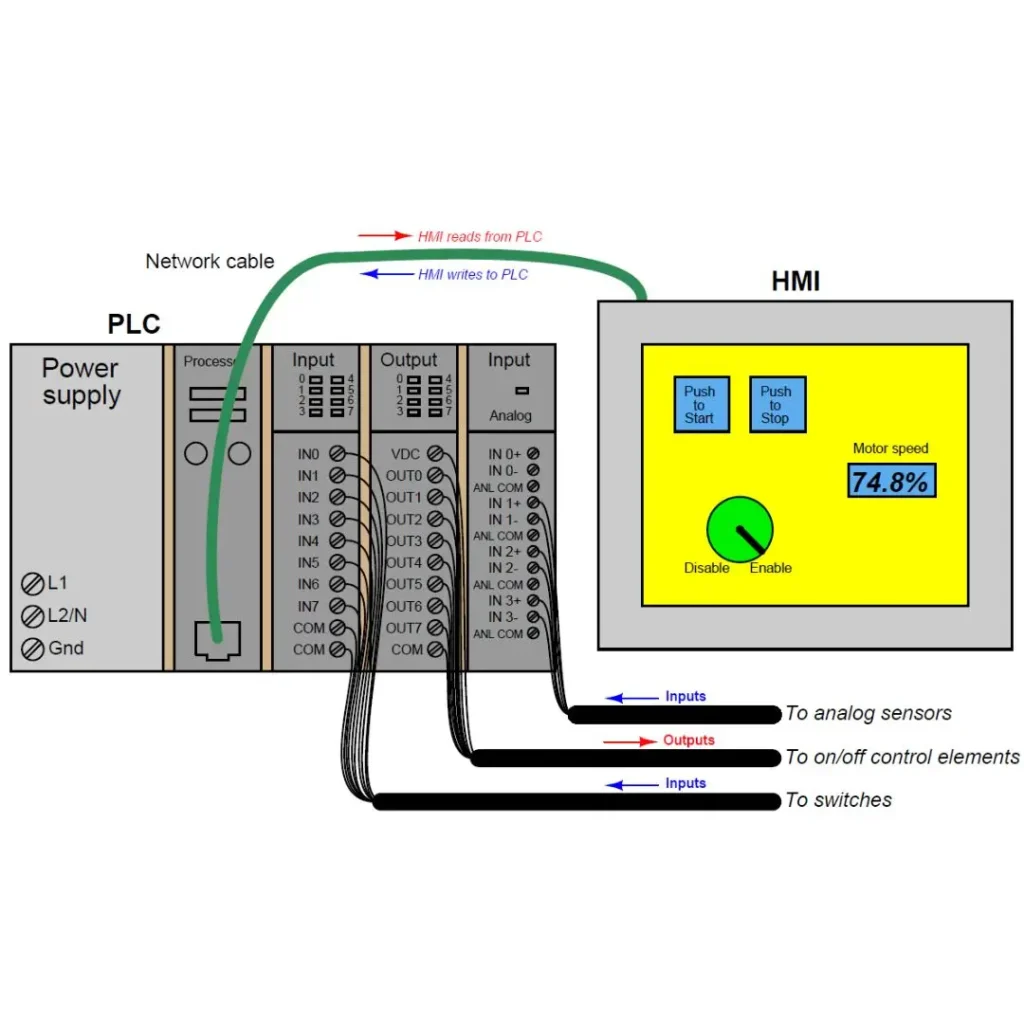
The hmi full form in electrical is also Human Machine Interface. In electrical engineering and industrial automation, HMIs are connected to Programmable Logic Controllers (PLCs), Variable Frequency Drives (VFDs), SCADA systems, and sensors to control electrical equipment efficiently.
Electrical engineers use HMI panels to monitor motor performance, electrical parameters, alarms, temperature, pressure, and production processes. These interfaces simplify machine operation while improving safety and reducing manual intervention.
How Does a Human Machine Interface Work?
A Human Machine Interface collects information from automation devices such as PLCs, sensors, controllers, and drives. It processes this information and displays it in an easy-to-understand graphical format. Operators can interact with the interface using touchscreens, buttons, or keypads to send commands back to the machine.
For example, in a manufacturing plant, an operator can use an HMI to:
- Start or stop production.
- Monitor machine status.
- Adjust operating parameters.
- View production reports.
- Check alarm notifications.
- Identify equipment faults.
- Monitor energy consumption.
- Control multiple machines from one panel.
This two-way communication improves both efficiency and operational control.
Benefits of Human Machine Interfaces
Industries across the world depend on human machine interfaces because they provide numerous operational advantages.
Improved Productivity
Operators can quickly monitor production and make adjustments without interrupting machine operation.
Reduced Downtime
Instant alarms and fault notifications allow maintenance teams to identify and resolve issues before they become major problems.
Better Decision-Making
Real-time production data helps managers optimize processes and improve efficiency.
Enhanced Safety
Operators can monitor hazardous equipment from a safe distance, reducing workplace risks.
Increased Accuracy
Automated monitoring minimizes manual errors and ensures consistent production quality.
Features of Human Machine Interface Design
A well-planned human machine interface design helps operators interact with machines quickly, safely, and efficiently. Below are some key features of an effective HMI design.
User-Friendly Interface
A simple and intuitive layout allows operators to navigate screens easily and access important machine information without confusion.
Real-Time Monitoring
The HMI displays live data such as temperature, pressure, speed, and production status, enabling quick decision-making.
Alarm and Notification System
Built-in alarms immediately alert operators to equipment faults or abnormal conditions, helping reduce downtime and improve safety.
Data Logging and Reports
Modern HMI systems record operational data and generate reports that help monitor machine performance and support preventive maintenance.
Customizable Screens
Operators can customize dashboards, graphics, and display layouts according to specific process requirements for better usability.
Multi-Device Connectivity
A quality human machine interface design supports communication with PLCs, sensors, drives, and other industrial devices, ensuring seamless automation.
Applications of HMI
The versatility of HMI technology allows it to be used across numerous industries.
Manufacturing Plants
Manufacturers use Human Machine Interface systems to monitor production lines, machine status, and equipment performance.
Food Processing Industry
Food manufacturers use an HMI system to control mixing, filling, packaging, temperature monitoring, and quality assurance processes.
Pharmaceutical Industry
Accurate monitoring and compliance reporting make HMI’s ideal for pharmaceutical manufacturing.
Water and Wastewater Treatment
Operators use HMI dashboards to monitor pumps, valves, filtration systems, and treatment processes.
Packaging Industry
Packaging machines rely on Human Machine Interface screens for production control, machine setup, and troubleshooting.
Components of an HMI System
A complete HMI system usually consists of:
- Touchscreen display
- Industrial computer
- Communication software
- PLC integration
- Sensors and field devices
- Network communication modules
- Data logging software
- Alarm management system
Together, these components create a reliable platform for machine monitoring and control.
Why Choose AR Automation?
AR Automation is a trusted provider of industrial automation solutions. Our company continues to offer advanced Human Machine Interface systems that combine modern technology, user-friendly operation, and reliable performance. Whether your business requires a standalone HMI panel or a complete automation solution integrated with PLCs and SCADA systems, AR Automation delivers dependable products designed for long-term industrial use.
A Human Machine Interface serves as the communication bridge between operators and machines, making industrial processes easier to monitor, control, and optimize. From improving productivity and reducing downtime to enhancing safety and simplifying machine operation, HMIs have become an indispensable part of modern industries. By choosing reliable automation solutions from AR Automation, businesses can offer better operational efficiency, smarter process control, and long-term productivity. AR Automation helps industries embrace automation with confidence and achieve superior performance in today’s competitive manufacturing environment.