AR Automation is a trusted provider of industrial automation solutions, helping businesses improve productivity, efficiency, and operational control through advanced technologies. In today’s automated industrial environment, operators need a simple and effective way to communicate with machines and monitor processes.
A Human Machine Interface (HMI) acts as the bridge between humans and machines, making industrial operations easier to manage and control. HMI solutions provide real-time visibility into processes, helping operators make informed decisions and maintain smooth production workflows.
What Is a HMI (Human Machine Interface)?
A HMI, or Human Machine Interface, is a system that allows people to interact with industrial machines, equipment, or processes through a visual interface. It serves as a communication platform where operators can monitor machine performance, view process data, receive alerts, and control equipment from a single screen.
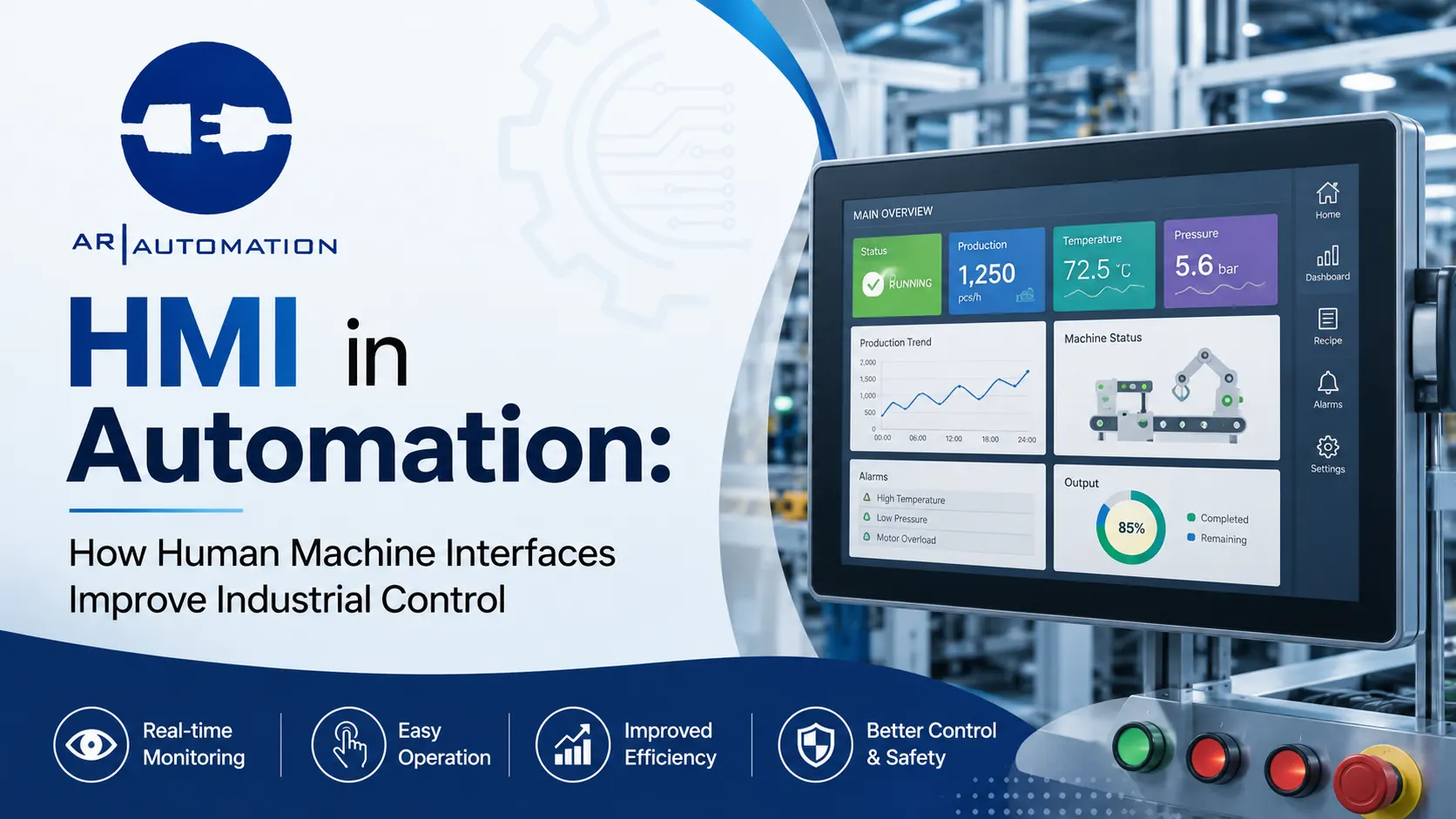
A machine interface can be a touchscreen panel, computer display, tablet, or specialized industrial monitor that presents information in a clear and easy-to-understand format. A common human machine interface example is a touchscreen panel in a manufacturing plant that displays machine status, production speed, temperature readings, and alarm notifications.
How Does Human Machine Interface Work?
The HMI communicates with control devices such as PLCs (Programmable Logic Controllers), sensors, drives, and other automation equipment. These devices collect data from machines and production processes, which is then displayed on the HMI screen in a user-friendly format.
The process generally follows these steps:
Data Collection
Sensors and field devices gather information from machines and production lines.
Communication
The collected data is transmitted to the PLC and then forwarded to the HMI system.
Visualization
The HMI converts raw data into meaningful information such as graphs, charts, alarms, and performance indicators.
Operator Interaction
Using the machine interface, operators can monitor conditions, adjust settings, and respond to alerts in real time.
This seamless communication improves decision-making and allows businesses to maintain better control over industrial operations.
Importance of HMI in Industrial Automation
HMI systems simplify complex processes by presenting critical information in an organized and visual manner. Industrial operators can quickly identify equipment issues, monitor production performance, and make necessary adjustments. The growing adoption of Industry 4.0 technologies has further increased the importance of HMI systems as businesses seek real-time access to operational data and performance metrics.
Benefits of Human Machine Interfaces
- Improved Visibility: HMI systems provide real-time monitoring of equipment and processes, allowing operators to view important information instantly.
- Enhanced Control: Operators can control machines directly from the HMI screen, making adjustments quickly and efficiently.
- Faster Problem Detection: Alarms and notifications help identify issues before they become major operational problems.
- Increased Productivity: By simplifying machine operation, HMI systems reduce delays and improve workflow efficiency.
- Better Data Management: Historical data, reports, and performance analytics can be stored and reviewed for continuous improvement.
- Reduced Human Error: User-friendly interfaces and automated alerts help minimize mistakes and improve operational accuracy.
Applications of HMI in Various Industries
HMI systems are used across numerous industries, including:
- Manufacturing: Monitoring production lines, robotic systems, and automated machinery.
- Food and Beverage: Managing processing equipment, temperature control systems, and packaging operations.
- Pharmaceuticals: Ensuring precise monitoring and control of critical manufacturing processes.
- Water Treatment: Supervising pumps, filtration systems, and water quality management.
- Energy and Power: Monitoring generators, turbines, substations, and electrical distribution systems.
- Automotive: Controlling assembly lines and maintaining production consistency.
The flexibility of HMI technology makes it suitable for almost every industry that relies on automation.
Why Choose AR Automation for HMI Solutions?
When implementing industrial automation systems, choosing the right technology partner is essential. AR Automation specializes in advanced automation solutions designed to improve operational efficiency and process control.
Our company can offer customized HMI systems that integrate seamlessly with PLCs, SCADA platforms, sensors, and industrial equipment. Whether businesses require a simple machine interface for monitoring equipment or a complete automation solution, AR Automation delivers reliable systems tailored to specific industrial needs.
Human Machine Interfaces have transformed the way operators interact with industrial equipment. Whether it’s a simple human machine interface example in a manufacturing plant or a sophisticated monitoring system in a power facility, HMI solutions continue to play a critical role in industrial automation. With expert solutions from AR Automation, businesses can implement advanced HMI systems that improve productivity, reduce downtime, and support long-term operational success.