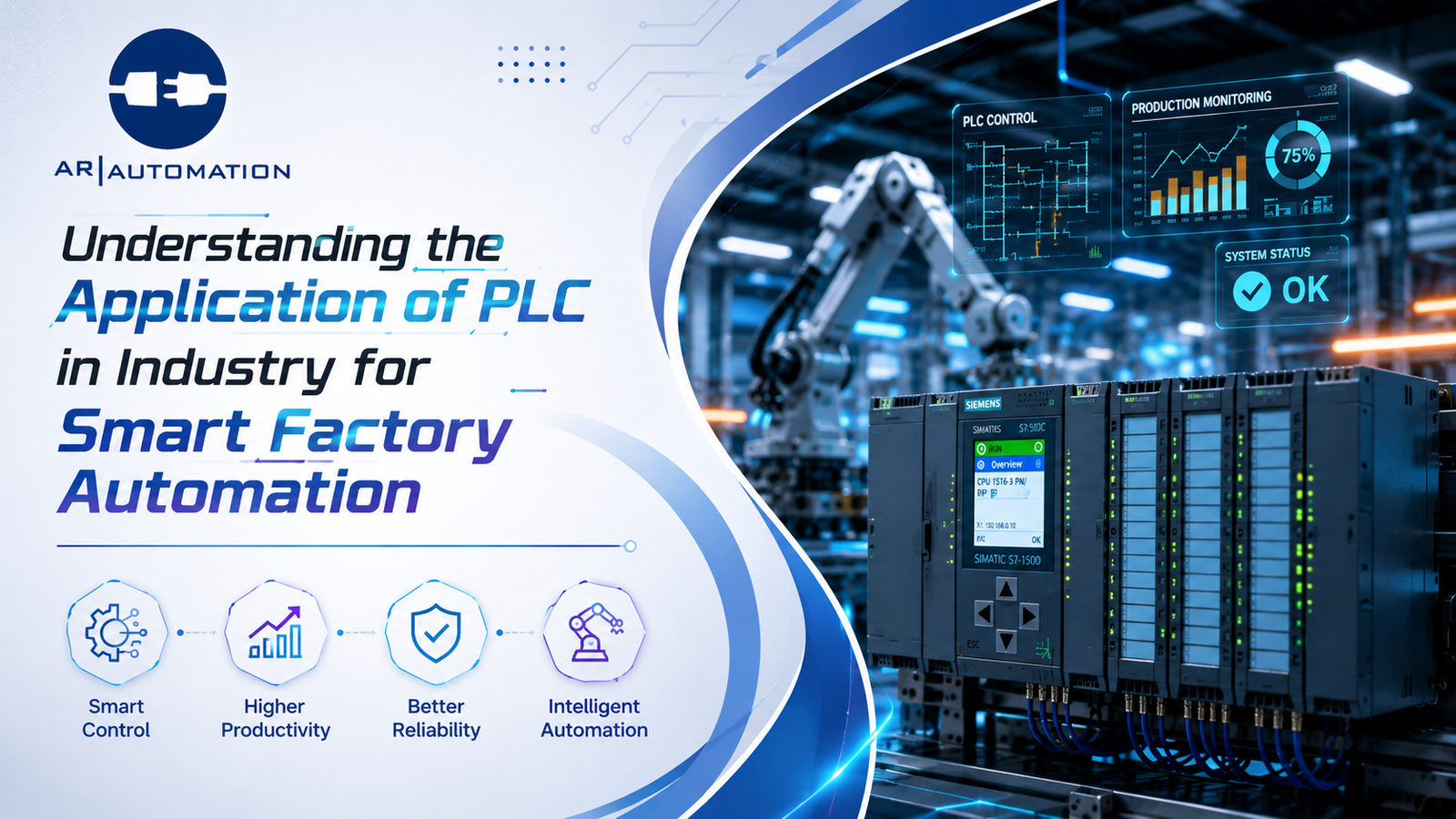
AR Automation is a trusted name in industrial automation solutions, helping businesses implement advanced PLC-based systems that improve efficiency and reliability. Our company continues to offer innovative automation solutions built to various industrial requirements. One of the most important technologies driving industrial automation is the PLC or Programmable Logic Controller. From manufacturing plants and packaging units to water treatment facilities and power generation systems, the application of PLC has transformed the way industries operate.
What is a PLC?
A Programmable Logic Controller (PLC) is a digital industrial computer designed to control machinery and automated processes. It continuously receives data from sensors, processes the information according to pre-programmed logic, and sends commands to motors, valves, relays, and other equipment. PLCs are highly flexible, reliable, and capable of operating in demanding industrial environments. This makes them ideal for a wide range of PLC applications across multiple industries.
Importance of PLC in Industrial Automation
The increasing demand for automation has significantly expanded the application of PLC in industry. PLC systems help organizations achieve better process control, minimize downtime, and improve overall productivity.
Some major benefits include:
- Improved operational efficiency
- Reduced human intervention
- Higher production accuracy
- Enhanced safety standards
- Real-time process monitoring
- Lower maintenance costs
These advantages have made PLC technology an essential component of modern industrial infrastructure.
Application of PLC in Manufacturing Industry
One of the most common applications of PLC can be found in manufacturing facilities. PLC systems control various production processes, ensuring smooth and uninterrupted operations.
- Assembly Line Automation: Manufacturing plants use PLCs to automate assembly lines, synchronize machinery, and manage production sequences.
- Material Handling Systems: The plc application in conveyor systems, sorting units, and automated storage facilities allows industries to move materials efficiently with minimal manual involvement.
- Machine Control: PLCs are widely used to control CNC machines, robotic systems, presses, and industrial equipment. They ensure precise operation while reducing the risk of human error.
PLC Applications in Packaging Industry
Packaging industries depend heavily on automation to maintain speed and consistency. Various PLC applications help control filling, labeling, sealing, and packaging operations. PLC systems monitor production parameters and automatically adjust machine functions to ensure accurate packaging. This reduces waste and improves operational efficiency.
Application of PLC in Water Treatment Plants
Water and wastewater treatment facilities represent another significant application of PLC in industry. These systems require precise monitoring and control of pumps, valves, chemical dosing equipment, and filtration processes. This automation improves treatment efficiency while reducing manual supervision requirements.
PLC Applications in Food and Beverage Industry
The food and beverage sector demands strict quality control and hygiene standards. Various applications of PLC help automate production lines, mixing processes, filling systems, and packaging operations. PLCs ensure consistent product quality by maintaining accurate process parameters such as temperature, pressure, and flow rates.
Application of PLC in Chemical Industries
Chemical manufacturing processes often involve complex reactions that require precise control. The application of PLC helps automate temperature regulation, pressure control, mixing operations, and safety systems. By continuously monitoring process conditions, PLCs ensure stable production and minimize operational risks.
Benefits of PLC-Based Automation
The growing popularity of the application of PLC in industry is largely due to the substantial benefits it provides.
- Increased Productivity: PLC systems automate repetitive tasks, allowing industries to achieve higher production rates without compromising quality.
- Improved Accuracy: Automated control reduces human errors and ensures consistent process performance.
- Enhanced Safety: PLCs monitor equipment conditions and can trigger alarms or shutdown procedures when abnormal situations occur.
- Easy Troubleshooting: Modern PLC systems provide diagnostic information that helps maintenance teams identify and resolve issues quickly.
- Scalability: Additional equipment and functions can be integrated without major system modifications.
Future of PLC Applications
As Industry 4.0 and smart manufacturing continue to evolve, the scope of applications of PLC is expanding rapidly. Modern PLC systems now integrate with SCADA, IoT devices, cloud platforms, and advanced analytics tools.
These technologies enable real-time data collection, predictive maintenance, remote monitoring, and intelligent decision-making. The future plc application landscape will focus on greater connectivity, efficiency, and automation across industries.
The application of PLC has revolutionized industrial automation by providing efficient, reliable, and flexible process control solutions. From manufacturing and packaging to power generation and water treatment, the diverse applications of PLC continue to drive productivity and operational excellence. As technology advances, the role of PLC systems will become even more significant. AR Automation continues to offer advanced automation systems that support the growing demands of modern industries.