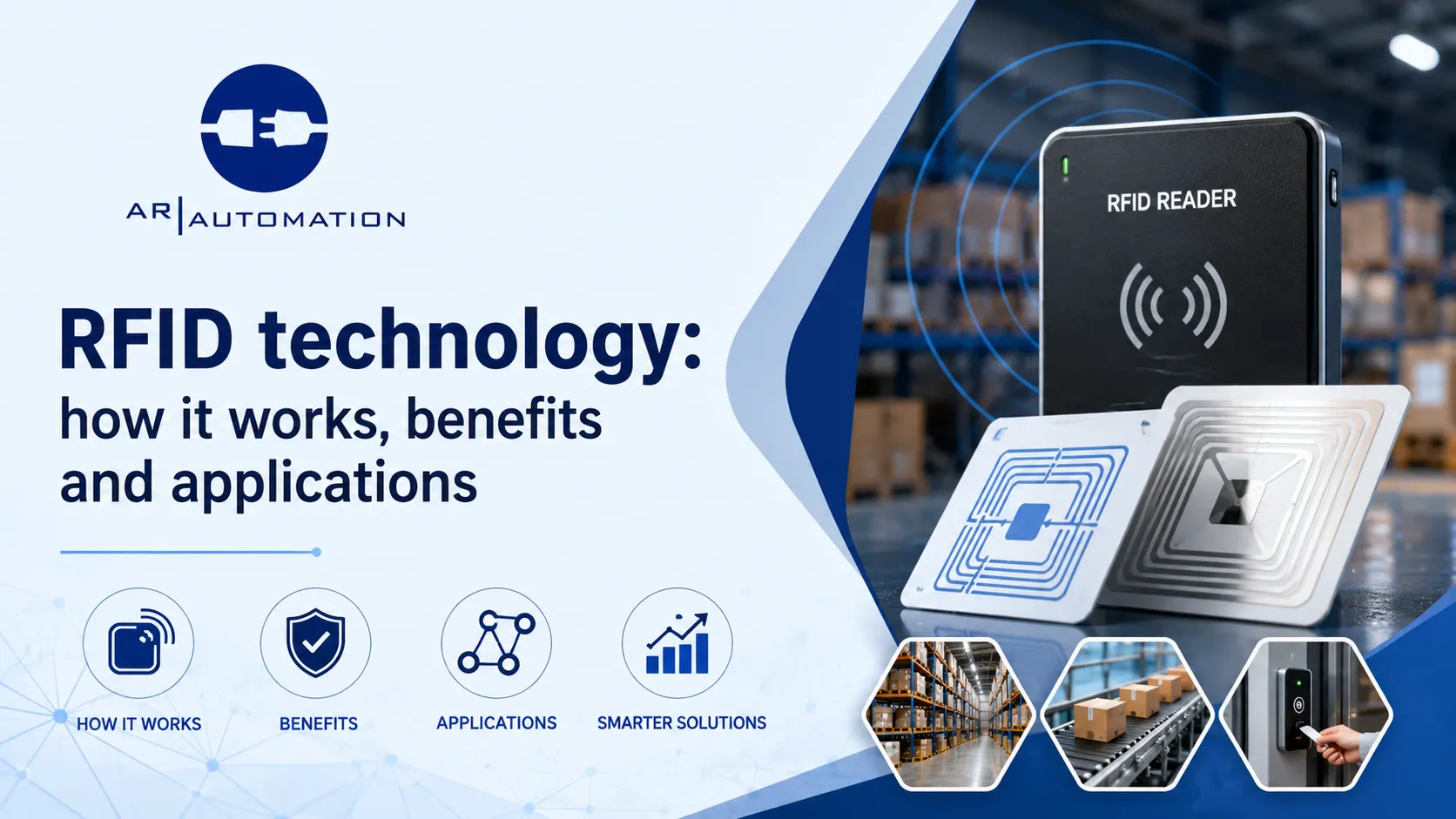
AR Automation is a trusted company that can offer advanced RFID solutions designed to improve productivity, reduce manual errors, and streamline business operations. Whether you need asset tracking, inventory management, or automated identification systems, RFID technology provides a modern and efficient solution. RFID technology has become one of the most reliable solutions for achieving these goals. From retail stores and warehouses to hospitals and manufacturing plants, RFID systems are transforming the way organizations track assets and manage data in real time.
What is RFID Technology?
RFID (Radio Frequency Identification) is a wireless technology that uses radio waves to identify, track, and monitor objects without requiring direct line-of-sight scanning. Unlike traditional barcode systems, RFID allows multiple items to be scanned simultaneously, making it faster and more efficient.
An RFID system generally consists of three main components:
- RFID Reader
- RFID Tags
- RFID Software or Database
The reader communicates with RFID tags using radio frequency signals. Once the tag responds, the information is transferred to the software, where it can be stored, analyzed, and managed. This technology has become essential for industries seeking automation and real-time visibility across their operations.
How Does RFID Technology Work?
Understanding how RFID technology works is simple. The process follows these steps:
1. RFID Tags Store Information
The system begins with RFID tags attached to products, equipment, pallets, vehicles, or other assets. Each tag contains a unique identification number along with other stored information.
2. RFID Reader Sends Radio Signals
An RFID reader emits radio frequency signals that activate nearby tags. Depending on the type of tag, the communication may occur over short or long distances.
3. Tag Responds Automatically
Once activated, the RFID tag transmits its stored information back to the reader without requiring physical contact.
4. Data is Processed
The reader forwards the captured data to a software platform where inventory records, asset locations, and operational information are automatically updated.
This automated process significantly reduces manual work while increasing speed and accuracy.
Benefits of RFID Technology
The benefits of RFID technology extend beyond inventory management and help improve overall business performance.
Improved Inventory Accuracy
One of the biggest benefits of RFID is highly accurate inventory tracking. Companies can instantly locate products and reduce stock discrepancies.
Faster Data Collection
Unlike barcode systems, RFID reads multiple items simultaneously, saving valuable time during receiving, shipping, and inventory audits.
Better Asset Tracking
RFID allows businesses to monitor valuable equipment, tools, containers, and vehicles in real time.
Reduced Human Errors
Automation minimizes manual scanning and data entry mistakes, improving operational reliability.
Enhanced Security
RFID systems help prevent theft, unauthorized movement of assets, and counterfeit products.
Increased Productivity
Employees spend less time searching for products or conducting manual inventory counts, allowing them to focus on higher-value tasks.
These rfid benefits make the technology a valuable investment for organizations aiming to improve operational efficiency.
RFID Applications Across Industries
The growing number of rfid applications demonstrates how versatile this technology has become. Businesses of every size are integrating RFID into their daily operations.
Retail Industry
Retailers use RFID for:
- Inventory management
- Stock replenishment
- Theft prevention
- Checkout automation
- Product authentication
Manufacturing
Manufacturers rely on RFID for:
- Production tracking
- Tool management
- Raw material monitoring
- Work-in-progress tracking
- Finished goods management
Warehousing and Logistics
Warehouse operations benefit from RFID through:
- Faster receiving
- Shipment verification
- Automated inventory counts
- Order accuracy
- Real-time warehouse visibility
Healthcare
Hospitals use RFID for:
- Patient identification
- Medical equipment tracking
- Medication management
- Staff monitoring
- Laboratory sample tracking
Transportation
Transportation companies use RFID to:
- Track vehicles
- Monitor cargo
- Manage toll collection
- Improve fleet management
- Enhance logistics planning
Libraries
Libraries use RFID to simplify book issuing, returns, inventory management, and anti-theft systems.
These diverse applications continue expanding as industries embrace digital transformation.
RFID Application in Modern Businesses
Every rfid application is designed to improve operational efficiency while reducing costs. Some of the most popular implementations include:
- Inventory tracking
- Asset management
- Employee attendance systems
- Vehicle identification
- Access control
- Supply chain management
- Warehouse automation
- Equipment maintenance tracking
- Document management
- Retail checkout automation
As technology evolves, new RFID solutions continue emerging across different sectors.
Types of RFID Tags
Different industries require different types of RFID tags depending on operating conditions and application requirements.
Passive RFID Tags
These tags do not contain an internal battery. They receive power from the RFID reader and are widely used due to their affordability.
Active RFID Tags
Active tags have built-in batteries, allowing them to transmit signals over longer distances. They are commonly used for high-value asset tracking.
Semi-Passive RFID Tags
These combine features of both passive and active systems, providing improved performance for specialized applications.
Selecting the right RFID tags depends on factors such as reading distance, environmental conditions, and project requirements.
Why Choose AR Automation?
AR Automation can offer customized RFID solutions tailored to your business requirements. From consultation and system design to installation and technical support, the company focuses on delivering reliable automation solutions that improve efficiency and long-term performance. Whether your organization requires warehouse automation, industrial asset tracking, inventory control, or advanced identification systems, AR Automation provides dependable RFID technologies that support business growth.
RFID technology has revolutionized how businesses manage inventory, assets, and operational processes. By enabling fast, accurate, and contactless identification, RFID systems reduce manual effort while improving efficiency across industries. From retail and healthcare to manufacturing and logistics, the growing range of rfid applications proves its value in modern business environments.
Investing in RFID is more than adopting new technology—it is about improving accuracy, productivity, and decision-making. With the right implementation partner like AR Automation, businesses can offer better services, optimize operations, and take advantage of the many rfid benefits that drive long-term success.