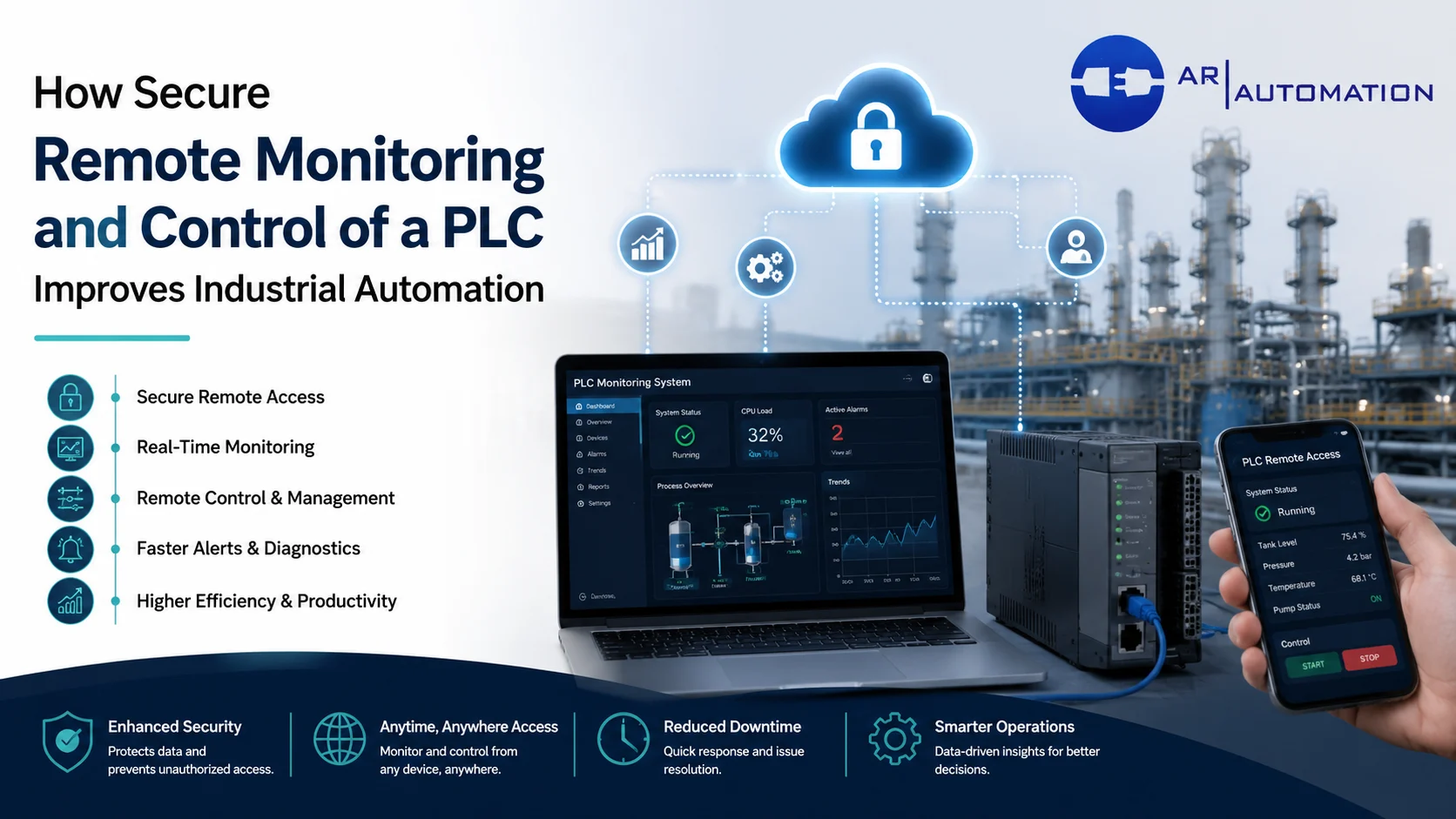
AR Automation is committed to helping industries embrace smarter and more efficient automation technologies. One of the most significant advancements in industrial automation is the ability to remotely monitor and control programmable logic controllers (PLCs). With secure connectivity and real-time access, businesses can improve productivity, reduce downtime, and optimize operations from virtually anywhere. A modern plc monitoring system plays a crucial role in achieving these benefits and transforming traditional industrial processes into intelligent automated systems.
Remote PLC Monitoring and Control
A PLC, or Programmable Logic Controller, is the backbone of many industrial automation systems. It controls machinery, production lines, pumps, conveyors, and numerous industrial processes. Traditionally, engineers and operators had to be physically present at the facility to monitor system performance and make adjustments. The integration of a reliable plc monitoring system enables industries to gain real-time visibility into their operations while maintaining high levels of security and efficiency.
Why Secure Remote Access Matters
While remote connectivity offers significant advantages, security is essential. Industrial systems contain valuable operational data and control critical processes.
Secure remote monitoring solutions use advanced technologies such as:
- Encrypted communication protocols
- Secure VPN connections
- Multi-factor authentication
- User access controls
- Activity logging and audit trails
These security measures ensure that only authorized personnel can access the PLC system and perform necessary actions.
Benefits of Secure Remote Monitoring and Control of a PLC
- Reduced Downtime: Unexpected equipment failures can lead to costly production losses. A secure plc monitoring system allows maintenance teams to identify issues before they become major problems.
- Faster Troubleshooting: Remote PLC access eliminates this delay. Engineers can instantly connect to the system, analyze data, identify faults, and implement corrective actions.
- Improved Operational Efficiency: With a modern plc monitoring system, businesses can track machine performance, production output, energy consumption, and system status continuously.
- Enhanced Productivity: Remote monitoring enables faster response times and better resource management. Operators can supervise multiple facilities from a central location, reducing the need for constant on-site supervision.
- Predictive Maintenance: One of the most valuable advantages of secure PLC monitoring is predictive maintenance. Instead of waiting for equipment failures to occur, businesses can use real-time data to predict maintenance requirements.
Applications Across Industries
Secure remote PLC monitoring is widely used across various industrial sectors.
- Manufacturing: Manufacturers use remote PLC systems to monitor production lines, robotic equipment, and automated machinery. Real-time visibility improves production efficiency and quality control.
- Water Treatment Plants: Water treatment facilities rely on PLCs to manage pumps, filtration systems, and distribution networks. Remote access allows operators to monitor water treatment processes continuously.
- Food and Beverage Industry: Production facilities use PLCs to control packaging, mixing, filling, and processing operations.
- Power Generation: Power plants depend on PLC systems for monitoring generators, turbines, and electrical equipment. Remote access helps maintain system reliability and operational safety.
- Oil and Gas Industry: Remote PLC control supports pipeline monitoring, storage facilities, and production equipment in geographically dispersed locations.
Features of an Effective PLC Monitoring System
An advanced plc monitoring system should include several important features:
- Real-Time Data Collection: Operators should have access to live operational data from connected equipment and processes.
- Alarm Notifications: The system should automatically send alerts when abnormal conditions occur, allowing rapid intervention.
- Historical Data Analysis: Access to historical performance data helps organizations identify trends and improve operational efficiency.
- Remote Configuration: Authorized personnel should be able to modify settings and update programs securely when needed.
- Scalability: The monitoring solution should support future expansion as business operations grow.
The Role of Industry 4.0
Industry 4.0 has accelerated the adoption of remote monitoring technologies. Smart factories increasingly depend on connected devices, cloud-based platforms, and data-driven decision-making.
A secure plc monitoring system serves as a critical component of Industry 4.0 by enabling communication between machines, sensors, and management systems. This connectivity supports automation, analytics, and continuous process improvement.
Why Choose AR Automation?
AR Automation specializes in delivering advanced industrial automation solutions designed to meet the evolving needs of modern industries. Our company helps businesses implement secure PLC monitoring and control systems that improve operational performance and reliability.
AR Automation can offer customized PLC solutions tailored to specific industrial applications. From system design and programming to installation and support, our company focuses on delivering efficient and dependable automation technologies.
Our experienced team continues to offer innovative monitoring systems that help businesses reduce downtime, improve productivity, and achieve greater operational control. Whether upgrading an existing facility or implementing a new automation project, AR Automation strives to offer solutions that align with industry best practices and long-term business goals.